Learn
Hail Damage on Your Roof: Will Insurance Cover It?
Hail is one of the most common — and most disputed — roof claim causes. Here's how coverage actually works, what adjusters test for, and how to document hail damage so it counts.
The Short Answer: Usually, With Conditions
Standard homeowners policies cover hail as a named peril — "sudden and accidental direct physical damage" from a storm event. In plain terms: if hail from a specific storm functionally damaged your roof, that's generally a covered loss. But "generally" does a lot of work in that sentence. Coverage turns on three questions: was there a real hail event on your date of loss, did the hail functionally damage the roofing, and does your policy exclude or limit that kind of damage? Get a yes on all three and you're in covered territory. Miss on any one and the claim gets difficult.
No article can promise your claim will be approved — every claim depends on its facts, your policy language, and the carrier's evaluation. What this article can do is show you exactly what the carrier will be testing, so you can prepare for each test instead of being surprised by it.
Test 1: Was There a Hail Event on Your Date of Loss?
The carrier checks weather data for your address on the date of loss you reported. National Weather Service storm reports, hail-tracking data, and news coverage all get consulted. If the data shows no hail at your location on that date, the claim stalls before it starts.
This is why your date of loss matters enormously. Hail damage is often discovered months after the storm — a homeowner notices granules in the gutters or a contractor spots bruising during an unrelated visit. If you guess at the date, or use the date you discovered the damage rather than the date of the storm, the weather data won't match. Do the homework: check NWS storm reports and local news for hail events in your area, ask neighbors when they had damage, and file with the actual storm date. An accurate date of loss is free and it removes the easiest reason to deny the claim.
Test 2: Is the Damage Functional or Cosmetic?
This is where most hail claims are won or lost. Carriers distinguish between functional damage — the hail compromised the roof's ability to shed water or shortened its service life — and cosmetic damage — marks that affect appearance but not performance. Many policies now carry explicit cosmetic-damage exclusions, particularly for metal roofing, and some extend them to other materials.
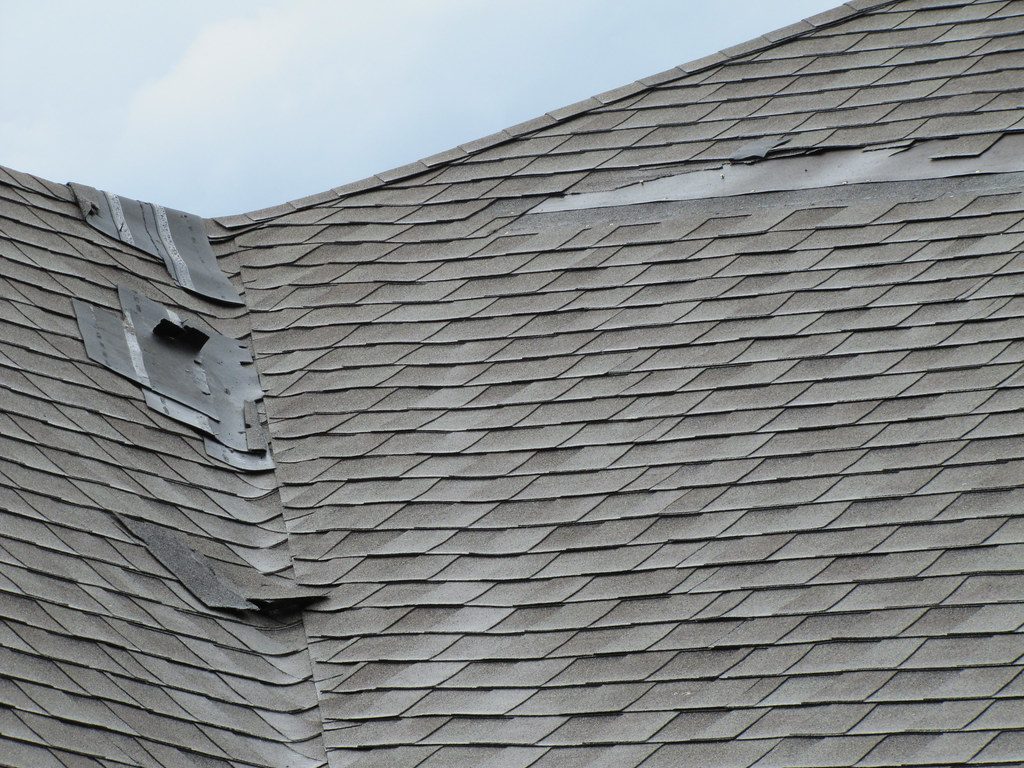
What counts as functional on asphalt shingles: bruising that fractures the shingle mat, granule loss deep enough to expose the asphalt or mat beneath, cracked or broken shingles, and displaced tabs. What gets called cosmetic: surface scuffs, minor granule displacement without mat exposure, dents in metal components that don't affect function. The distinction is genuinely technical, which is why how adjusters evaluate hail vs. wind damage is worth reading — it shows what they're trained to look for.
Check your policy for cosmetic-damage language before you file. If your policy excludes cosmetic damage for your roofing material, understand that the bar is functional damage specifically — and your documentation needs to prove it. If there's no such exclusion for your material, the carrier can't apply one that isn't in the contract.
Test 3: How the Adjuster Verifies Hail
Adjusters don't just eyeball the roof. The standard field method: they mark suspected hail hits with chalk, count the hits per "test square" (a 10×10-foot area) on each slope, and check for a consistent pattern — random, directional distribution consistent with a storm, not clustered in a way that suggests something else. They also look for collateral damage: dented gutters, downspouts, window screens, AC condenser fins, painted metal vents. Collateral damage corroborates that hail of sufficient size actually fell on the property.
Knowing this tells you what to document before the adjuster arrives: photograph the collateral damage (it's often more photogenic and persuasive than shingle bruising), note the hail size if you witnessed the storm, and preserve any physical evidence — actual hailstones photographed next to a ruler, dented patio furniture, damaged screens. This evidence is perishable; gutters get replaced, screens get fixed. Document it now.
What Hurts Hail Claims Most
- An old roof with no maintenance records. The carrier's easiest argument is wear and tear. If the roof is 20+ years old, expect the "was this hail or age?" fight — and prepare with storm-date evidence and photos showing fresh, distinct impact marks rather than uniform deterioration.
- A wrong or vague date of loss. As covered above: the weather data has to match. "Sometime last summer" isn't a date of loss.
- No photos before the adjuster visit. Once the inspection happens, your independent documentation is what lets you challenge findings. Our photo documentation guide covers the slope-by-slope method: close-ups with scale, wide shots per slope, collateral damage.
- Waiting too long to file. Policies require prompt notice. Months of delay between the storm and the filing invite questions about whether the damage is really from that storm — and in some states, give the carrier a timeliness argument.
If the Claim Is Denied
Hail denials most often come back as "cosmetic only," "wear and tear," or "no storm event." Each has a specific response: for cosmetic findings, evidence of mat exposure and functional impairment; for wear and tear, storm-date evidence plus photos of distinct impact marks; for no-storm findings, corrected weather data and neighbor claims from the same event. Our step-by-step guide to what to do after a denial walks through the response sequence, and our rundown of common denial reasons covers the hail-specific ones in detail.
Document hail damage like a pro
The Storm Damage Photo Guide ($17) shows you exactly what to photograph after a hailstorm — the angles, the scale references, the collateral damage shots, and the slope-by-slope system that makes your documentation persuasive to adjusters. Photos are the backbone of a hail claim; this is the system.