Learn
What "Matching" Means in a Roof Insurance Claim (And Why Carriers Fight It)
The adjuster agrees your roof is damaged — but only wants to replace part of it. The new shingles won't look like the old ones, and you'll be the one staring at a two-tone roof for twenty years. Here's what matching means, why carriers resist it, and how to make the argument.
What "Matching" Actually Means
In insurance-claim language, "matching" means the repaired or replaced portion of your roof has to look reasonably uniform with the rest of it — same color, same profile, same overall appearance. It's the difference between a roof that looks like one roof and a roof that looks like a patchwork quilt.
This isn't about vanity. A visibly mismatched roof affects your home's value and curb appeal, and in many cases the only way to restore the roof to a uniform appearance is to replace more than just the damaged section. That's the core of the argument: insurance is supposed to return you to your pre-loss condition, and a pre-loss roof had matching shingles on every slope.
Matching disputes usually come up in two situations. The first: the carrier wants to repair or replace one slope while leaving the others, and the new material won't match. The second: your shingle product has been discontinued, so an exact match is literally impossible to buy — a much stronger position for you, as we'll cover below.
Why Carriers Fight Matching
Here's the honest version: matching is expensive for carriers. If the adjuster agrees that a partial repair can't match, the scope jumps from one slope to the whole roof — often doubling or tripling the claim. So the carrier has a built-in incentive to argue that the new material matches "closely enough" or that the mismatch doesn't matter.
You'll typically hear some version of these arguments:
- "The new shingles are a close match." Up close under overcast light, maybe. From the street in full sun, you may see a hard line where the old roof ends and the new begins.
- "The mismatch is only cosmetic." Carriers sometimes argue that a cosmetic difference isn't covered damage. Whether that holds depends on your policy language — some policies explicitly require reasonably uniform appearance, and some states' insurance regulations say the same.
- "We can blend the repair." Sometimes true with paintable materials or when damage is in a low-visibility area. Often not true when the damaged slope is the front of the house.
None of these arguments are automatically wrong — but none of them are automatically right either. Each one deserves evidence, not a shrug.
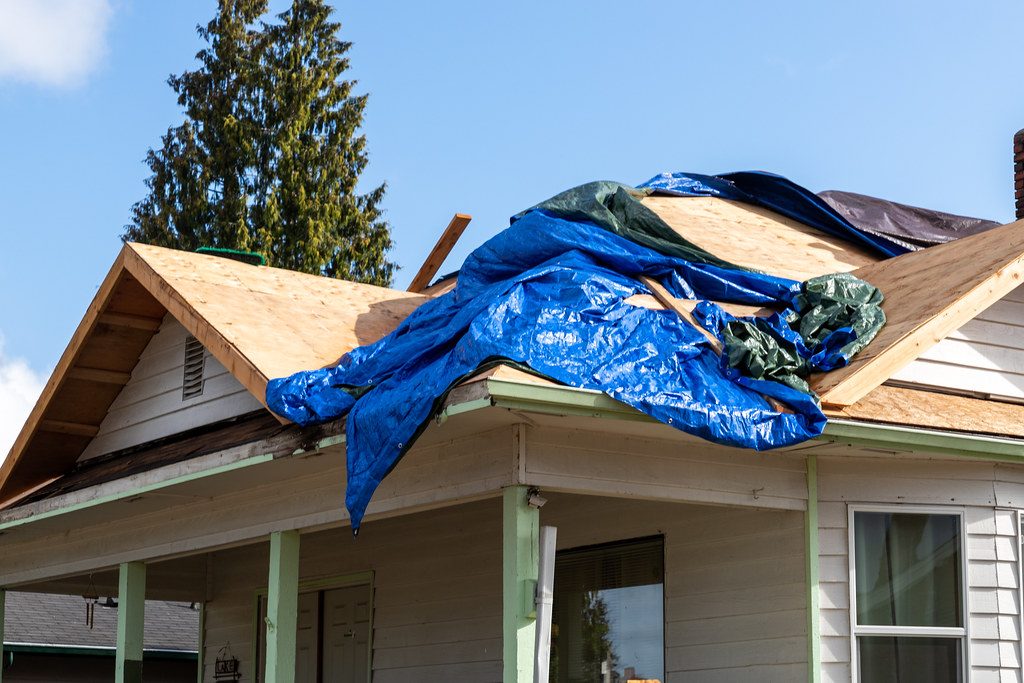
Step One: Is Your Shingle Even Still Made?
The single most powerful matching argument is also the simplest: the product is discontinued. Manufacturers change colors, discontinue lines, and update profiles constantly. A shingle installed twelve years ago may not exist anymore in any form — and if it doesn't exist, no one can claim a match.
Here's how to check:
- Find your shingle's manufacturer and color name. Check leftover bundles in the garage, your closing paperwork from the original roof, or ask the roofer who installed it.
- Look the product up on the manufacturer's website or call their customer line. Ask specifically whether the color is still in production.
- Get the answer in writing. An email from the manufacturer — or a letter from your roofer stating the product is discontinued — is evidence. A verbal "yeah, they don't make that anymore" is not.
If the product is discontinued, say so in writing to the carrier and attach the proof. This converts the dispute from an opinion about appearance into a fact about availability — and facts win arguments.
The Three Matching Arguments That Actually Work
Whether or not your shingle is discontinued, these are the three arguments homeowners and contractors use successfully in matching disputes:
1. Reasonably uniform appearance. Many policies contain language requiring repairs to result in a reasonably uniform appearance, and several states have insurance department guidance saying the same. Pull your policy jacket and read the loss-settlement and repair sections. If the language is there, quote it back to the adjuster in writing.
2. Line-of-sight visibility. A mismatch on the back slope behind a two-story addition is a different argument than a mismatch on the front slope facing the street. Photograph the mismatch from the distances people actually see the roof — the curb, the sidewalk, the neighbor's yard. If the patch is obvious from the street, say so, and attach the photos.
3. The discontinued-product fact. As above: if the exact product can't be bought, the carrier can't produce a match. Period. This one rarely survives pushback.
Our guide to decoding your homeowners policy walks through how to find the exact sections that control repair and appearance standards — read it before you write your matching letter.
How to Document a Matching Dispute
Matching disputes are won on photos. Here's what to capture:
- Wide shots of the full slope from the street, the sidewalk, and the driveway — the views buyers and neighbors actually see
- Close-ups of the transition line between old and proposed-new material (or a sample board of the proposed shingle held against the existing roof)
- Photos in different light — morning, midday, and late afternoon. Some mismatches only show in direct sun; document all of it
- The manufacturer's discontinuation confirmation, if you have it
Our photo guide covers the technique side — timestamps, angles, and what adjusters look for. For a matching dispute, the sample board photo is the money shot: one image of the proposed replacement shingle sitting on your existing roof, in daylight, tells the whole story.
If the Carrier Won't Budge on Matching
Sometimes the carrier holds the line: they'll pay for the partial repair and nothing more. At that point you have a few paths, and they're worth knowing in advance:
Request a reinspection focused on matching. Ask — in writing — for the file to be reexamined on the matching question specifically, with your photos and any discontinuation proof attached. Reinspections are how files get a second look; our denial follow-up guide covers the mechanics of getting a file reopened.
Get your contractor's written opinion. A roofer's letter explaining why the repair can't match — discontinued product, color lot variation, profile change — carries weight, especially when it's specific about the product and the slope.
Consider appraisal for the scope dispute. If the disagreement is really about what's owed rather than whether there's coverage, appraisal may be the right dispute path. Our appraisal explainer covers how it works and when to invoke it.
And know the math of the fallback: if the carrier approves the partial repair and you want a uniform roof, the difference between the partial approval and a full replacement comes out of pocket. Get that number from your contractor before you decide anything — it's the number every other option gets measured against.
Want the full walkthrough?
The Roof Claim Playbook is a 25-page plain-English guide for homeowners that walks through your entire claim — from the first storm to the final check — including how to read your policy's repair language and push back when the scope comes up short.